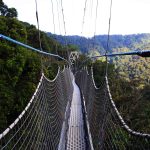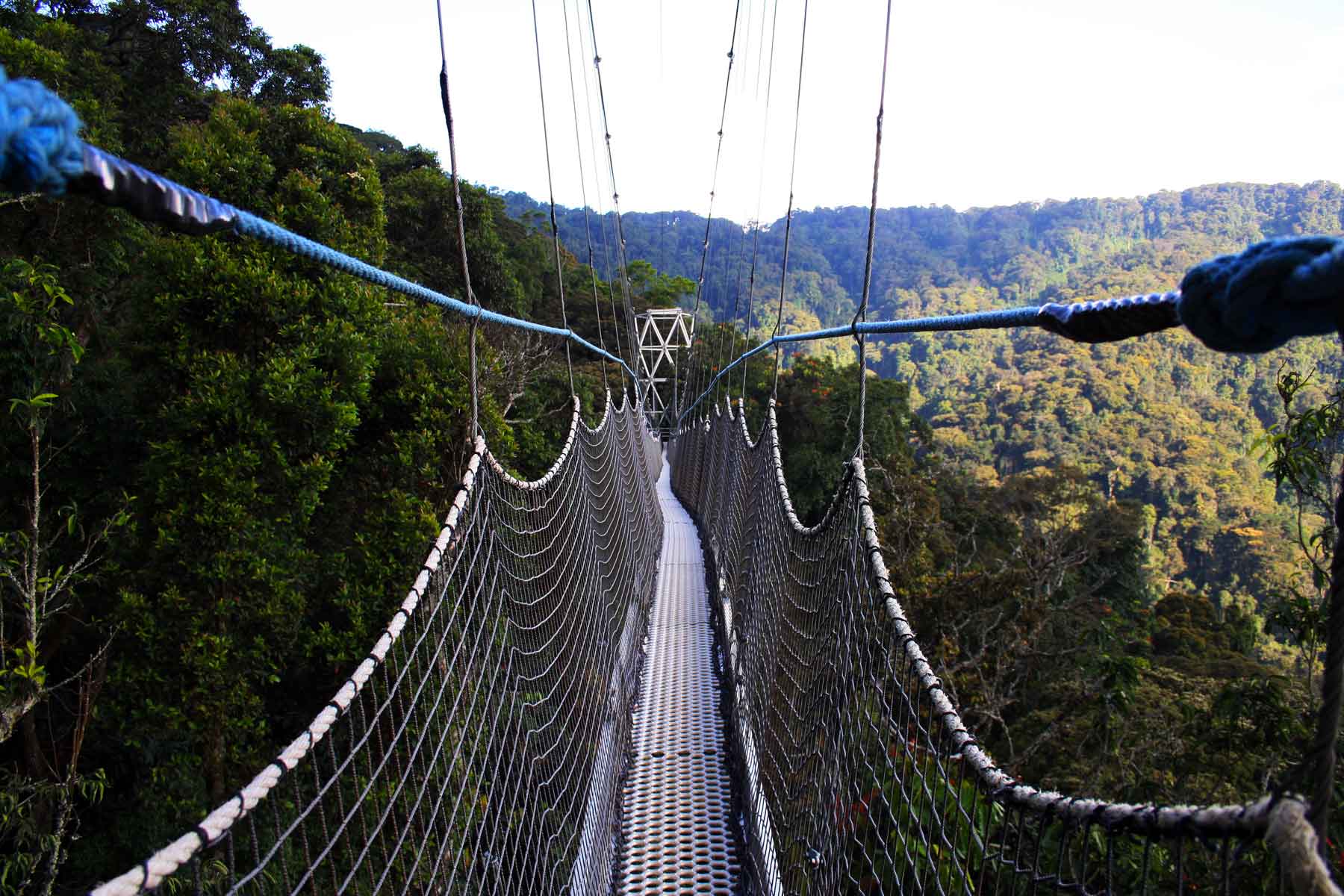
The canopy walk in the Sebitoli sector of Kibale National Park is a tourism project that aims to give visitors a different way of experiencing the tropical forest. Instead of only walking on the forest floor, visitors will be able to walk along an elevated path that passes through the upper level of the forest. From this height, it becomes easier to observe the structure of the rainforest, the movement of primates in the trees and many bird species that usually remain hidden within the canopy.
The canopy walkway is located in the Sebitoli tourism zone which lies in the northern part of Kibale National Park. Sebitoli is about 20 kilometres from Fort Portal and can be accessed through the Sebitoli visitor centre. Sebitoli was opened to tourism in the early 2000s to reduce visitor pressure in the Kanyanchu area which is the main centre for chimpanzee tracking in the park. Although chimpanzee tracking is not conducted here, the area offers guided nature walks and opportunities to see several primate species such as black-and-white colobus monkeys, blue monkeys, and vervet monkeys. The area is also good for bird watching and forest exploration.
Kibale National Park is one of the most important tropical forests in East Africa. The park covers about 795 square kilometers and contains a mixture of moist evergreen forest, swamps and grassland areas. The forest is especially known for its primate population. It supports 13 species of primates including chimpanzees, red colobus monkeys, black-and-white colobus monkeys and L’Hoest’s monkeys. Many of these animals spend much of their time in the upper forest canopy which is why the canopy walkway will provide a better opportunity to observe them.
The park is also home to many other animals such as forest elephants, duikers, bush pigs and several species of bats. In addition, more than 370 bird species have been recorded in the park, making it a good destination for bird watchers.
Structure and design of the Canopy walk
The planned canopy walkway is designed to stretch for about 450 metres through the forest and will be approximately 1.4 metres wide. The project also includes a viewing tower that rises about 27 metres above the ground, allowing visitors to observe the forest from above the tree canopy.
The structure is planned carefully so that it does not damage the forest. The design aims to avoid cutting trees and instead uses support systems that fit within the natural forest environment. The walkway will occupy a small area near the Sebitoli park administration zone, ensuring that the surrounding forest remains largely undisturbed. Walking along the canopy will allow visitors to experience the forest from a perspective that is normally only seen by birds and tree dwelling animals. From this level, it becomes possible to observe monkeys moving between trees, birds feeding in the canopy and the layered structure of the rainforest vegetation.
Importance
The introduction of the canopy walk is part of efforts to expand tourism activities in Kibale National Park. For many years, the park has been mainly known for chimpanzee tracking but conservation managers are working to add more activities so that visitors can experience different parts of the park. The canopy walk will help attract visitors who are interested in forest exploration, bird watching and photography. It may also encourage tourists to spend more time in the area instead of visiting only for chimpanzee tracking.
Another goal of the project is to support conservation and community benefits. Tourism revenue contributes to park management and also supports nearby communities through employment opportunities and tourism related businesses.
The canopy walk will add a new activity for visitors exploring western Uganda. Travellers visiting the region will be able to combine the canopy walk with other experiences such as forest walks in Kibale, chimpanzee tracking at Kanyanchu and visits to nearby crater lakes around Fort Portal.
By offering another way of exploring the forest, the canopy walk will help visitors understand the different layers of the rainforest ecosystem and appreciate the biodiversity found in Kibale. At the same time, the project supports the broader goal of promoting sustainable tourism while protecting one of Uganda’s most important forest habitats.