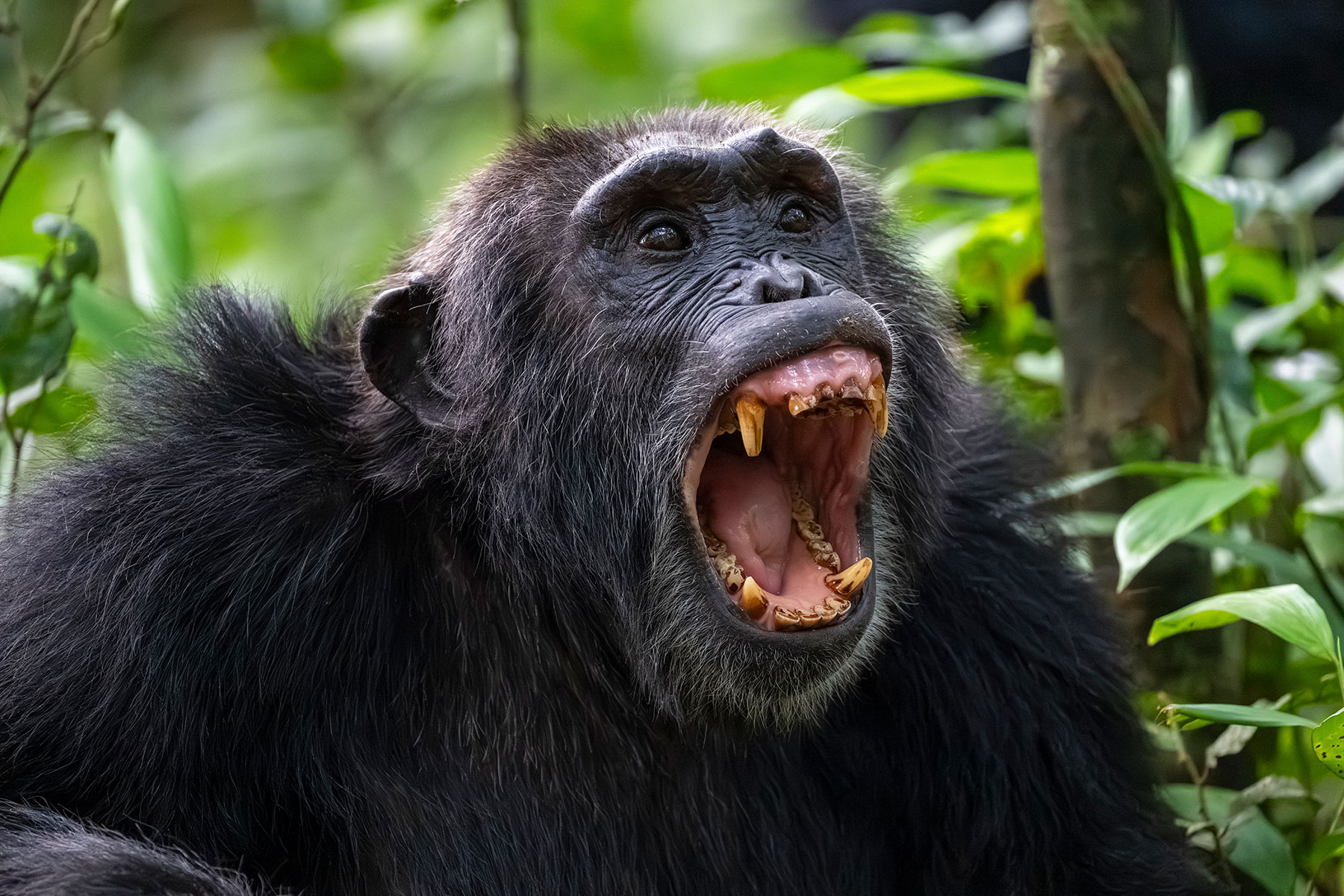
The ongoing Chimpanzee civil war in Uganda’s Kibale forest national park involves two rival groups fighting each other. This has been attributed to navigating historical complex social politics, family dynamics and dangerous territory disputes.
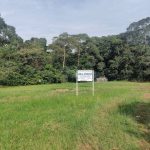
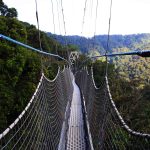
Nicknamed the “Primate Capital of the World,” Kibale forest is famous for harboring over 5,000 eastern chimpanzees among other 12 primate species including red colobus monkeys, blue monkeys, black and white colobus monkeys. Primate research in Kibale began in the 1970s with establishment of the Kibale Chimpanzee Project (KCP) by Dr. Richard Wrangham in 1987. The park is one of the leading tourist destinations in Uganda mainly attracting primate enthusiasts for experiences like chimpanzee tracking.
Initially, KCP studied a small chimpanzee community with its home range in Kanyawara area within the northwest part of the forest and how habitat loss and ecosystem productivity influenced the behavior of wild chimpanzees. Due to the vastness of the forest, new study areas were envisaged which led to the discovery of a second chimpanzee community in another location called Ngogo within the central part of Kibale forest 12 km southeast of Kanyawara.
Named after the place, the Ngogo chimpanzee community with over 200 individuals is the largest known single primate troop in Africa. The Ngogo Chimpanzee Research Center was established in 1995 as conservationists got interested in understanding the coexistence of such a large community, its behavioral ecology including unique hunting and reproductive patterns. Continuous monitoring revealed that the entire community shared the same territory for so long before it split into central and western factions each with its own alpha males and home range.
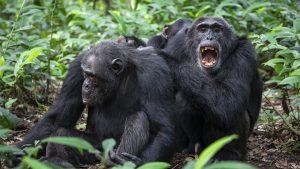
By 2015, the Ngogo community had grown too large to remain a single unit leading to a permanent split as rival alpha males competed for resources and carved out their own territories to assert dominance. The nature of the terrain of Kibale also influenced the separation, the elevation ranging between 1,100-1,600 meters (3,600-5,200ft) characterized by gentle slopes, dense undergrowth, and small streams influenced how the groups’ moved, interacted, and patrolled their new home ranges.
From 2015 onwards, the interaction between the western and central factions indicated signs of serious conflict with the western group being the main aggressor. According to a Netflix documentary titled “Chimp Empire” released in 2023, Hutcherson, an alpha male from the western faction, would lead a coalition targeting and killing the central group’s leaders including Miles and Jackson. The fierce rivalry went on for several years and culminated into what the primatologists described as a “chimpanzee civil war in Uganda” that broke out in April 2026.
Field observations indicate that Over 28 chimpanzees including 19 infants and 9 adults have lost their lives following the rout. Such fierce conflict among wild chimpanzees was first documented by the legendary primatologist late Jane Goodall in Gombe Stream national park, western Tanzania. The Gombe Stream chimpanzee war lasted from 1974-1978 of which over 10 individuals are known to have died. Casualties were recorded from both the Kasakela and Kahama communities of which Kasakela eventually emerged victorious.
Archival data suggests that researchers observed tactics used including targeted killings through which males were recorded conducting intense violent acts of beating, biting, and killing rivals, particularly in the later stages of the war. Disappearance of individuals was also recorded and the survivors became part of a new group which of Kahama was completely absorbed. Based on archival data, the 2026 Uganda chimpanzee civil war has recorded more casualties than those in Gombe, making for the bloodiest chimpanzee conflict ever recorded in primate history.
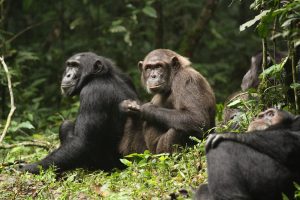
Scientists at Ngogo Research Station described it as a “one sided rout” where the Western faction has been the sole aggressor, systematically hunting down rival members without losing any of their own in return. Having studied the apes for over two decades, the chimpanzee war has become an emotional and horrific experience for them. Witnessing the pant-hoots of aggression and brutal tactics applied by the western faction such as mutilation and targeted executions of former allies and systematic infanticide.
The perspective among the witnesses is shifting from documenting daily life to understanding the conflict. How a chimpanzee community that once coexisted, mutually hunting together and grooming each other could engage in such a brutal conflict makes Kibale forest national park become a new “Primate Battlefield of the World.” There has not been an attempt to intervene, leaving the chimpanzee civil war to unfold naturally.
According to the Smithsonian Institute, the Uganda chimpanzee civil war has been ongoing for 8 years (2018–2026) has provided unprecedented insights into the roots of conflict, suggesting that lethal, coordinated violence is an innate evolutionary trait rather than merely a result of human encroachment or habitat loss. This war makes the future of Kibale chimpanzees uncertain. The genetic diversity of the Ngogo population may be under threat if the central faction is completely assimilated. If the western faction becomes a super community, there’s also a need to understand how they will interact with the Kanyawara among other existing communities within Kibale forest.