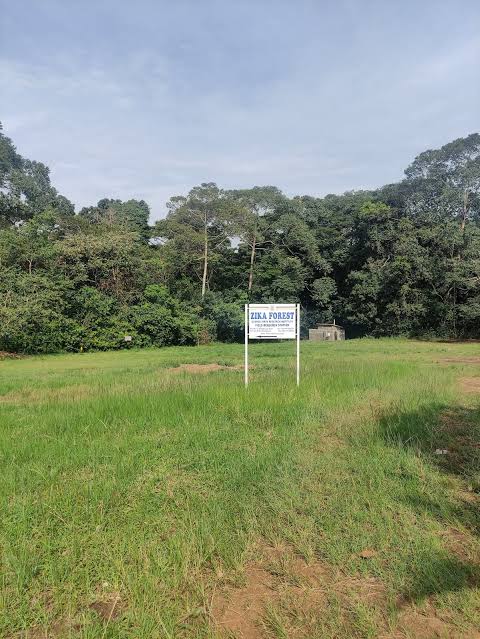
Zika Forest is a small tropical forest located near Entebbe in Wakiso District close to the shores of Lake Victoria. The protected area is next to swamps of Waiya Bay, an inlet of Lake Victoria. The forest covers roughly 25 hectares and is part of a protected natural reserve used mainly for scientific research and biodiversity conservation. The name “Zika” comes from the Luganda word “Ziika,” which means “overgrown” or “dense.” This name describes the thick vegetation and dense tropical growth found in the forest.
Although small in size, Zika Forest is known worldwide because it is the place where scientists first discovered the Zika Virus. Because of this discovery, the forest became an important location for studying mosquito-borne diseases. Today, Zika Forest is recognized as both a scientific research site and an ecological habitat that supports many species of plants, insects, birds and small mammals.
History of Zika Forest
Zika Forest became famous around the world because of the major scientific discovery made there in 1947. At that time, researchers from the Uganda Virus Research Institute working together with scientists from the Rockefeller Foundation were studying how diseases are spread by mosquitoes. Their main goal was to understand which viruses mosquitoes carry and how these viruses can affect both animals and humans.
To carry out their study, the scientists placed a rhesus monkey in a cage and positioned it on a raised platform in the forest. This allowed mosquitoes in the area to feed on the animal under controlled conditions so that any infections could be detected and studied.
After some days, the monkey became sick and developed a fever. When the scientists tested its blood, they discovered a new virus that had never been recorded before. This virus was later named the Zika Virus, after the forest where it was first identified. Zika virus as well as the moths sidisca zika and milocera zika are named after the forest.
At first, the discovery was mainly important for scientific research on mosquito-borne diseases in tropical regions. However, many years later, the virus gained worldwide attention when outbreaks were reported in different parts of the world especially in the Americas and Asia.
Ecology of Zika Forest
Zika Forest has a rich and active ecosystem. The forest supports a wide range of insects, birds, primates, plants and other small animals. Zika is a home to over 40 mosquito species including the Aedes africanus which lives mainly in tropical forest environments. This species was one of the mosquitoes linked to the discovery of Zika virus. Mosquitoes in the forest breed in small pools of water, tree holes and moist areas on the forest floor. Researchers have long studied these mosquitoes to understand how viruses move between animals and humans. Inside the forest stands a tall metal research tower that scientists use to collect mosquitoes at different heights. For example, some mosquitoes live close to the forest floor while others live higher in the tree canopy. Studying mosquitoes at these different levels helps scientists understand how diseases circulate between wildlife and humans. Other mosquitoes in the forest include malaria mosquitoes, yellow fever mosquitoes, silver mosquitoes, psorophora mosquitoes, mansonia mosquitoes, black tailed mosquitoes, coquilleffidia mosquitoes, western encephalitis mosquitoes, eastern salt mosquitoes, flood water mosquitoes among others.
The forest also provides home to over 62 species of sphingid moths and butterflies which are important pollinators in tropical ecosystems. Butterfly species include; blue turaco butterfly, citrus swallow tail, giant swallow tail, African queen butterflies, green-banded swallow tail, Uganda gilder which are dotted with attractive colors. Zika forest features over 135 woody plants and 140 tree species. Some of these trees include Mahogany, Musizi, Muvule, Nkoba, Jack fruit, mango trees and Ficus species. These trees provide fruits, seeds and leaves that feed animals and insects. For example, fig trees are particularly important because their fruits attract birds, monkeys and bats. Beneath the tall trees grow shrubs, vines, ferns and other plants that form dense vegetation.
Several wildlife species also live in the forest. Although large animals are not common due to the forest’s small size, smaller mammals and primates can still be seen. Two of the most common primates are the Vervet Monkey and the Red-tailed Monkey. Other species available in the forest include wild cats, black and white colobus, wild rabbits, alligators, sitatungas among others. Reptiles such as snakes, tortoises, terrapins and chameleons can also be spotted. The forest support over 200 bird species and they include coland, white collared olive back, grey parrot, black bee eater, fly catcher grey capped warlder, dusky long tailed cuckoo, white winged tern malachite, blue headed sunbird, pied kingfisher, blue throated roller, African morning dove, papyrus canary, African fish eagle, papyrus gonolek among others.
Activities offered in Zika Forest
Zika forest offers a variety of educational and nature based activities. Most of these activities are suitable for visitors interested in nature, conservation, science and bird watching. Because the forest is protected and managed for research purposes, visits are usually arranged in advance through research institutions or conservation authorities. Among these activities include;
Guided nature walks
This is one of the popular activities offered in Zika forest. These walks offer visitors a chance to explore the forest on foot while learning about its ecosystem, vegetation and wildlife. The walks are normally led by a guide or researcher who explains the different tree species, medicinal plants, insects and forest habitats found within the area. Visitors walk along narrow forest trails under the forest canopy while observing the natural environment. During the walk, guides often explain how tropical forests support biodiversity and why forests like Zika are important for climate regulation, rainfall formation and wildlife conservation. Visitors may also learn how mosquitoes breed in forest environments and why the forest became internationally important in disease research.
Scientific and educational tours
Scientific and educational visits are one of the main reasons people visit Zika Forest. The forest has a long history of medical and mosquito research dating back to the discovery of the Zika Virus in 1947. Students from universities, health institutions and research organizations visit the forest to study tropical ecosystems, mosquito behavior and disease transmission. During these tours, visitors may be introduced to mosquito trapping methods, insect collection techniques and ongoing scientific studies carried out in the forest. Researchers sometimes demonstrate how mosquito samples are collected and monitored for scientific analysis. Visitors may also learn about the relationship between forests, insects, animals and human health.
Bird Watching
Bird watching is another activity offered in Zika Forest because the forest supports a variety of forest bird species. Birding is usually done early in the morning when birds are most active. Visitors walk quietly through the forest trails while listening for bird calls and spotting birds in the trees and undergrowth. Some bird watchers carry binoculars and cameras to help identify and photograph different species. The forest attracts both resident forest birds and migratory species. Guides may help visitors identify birds by their calls, colors, feeding habits and nesting behavior. Some of birds that can be spotted include Velvet mantled Drongo, Yellow-billed stork, African Goshawk, African firefinch, Great blue turaco, steppe eagle, little bitten, willow warbler, Barn swallow and European bee eater.
Other things to do in Entebbe
Besides visiting Zika Forest, visitors can enjoy many other attractions and activities around Entebbe. For instance;
Visiting the Uganda Wildlife Education Centre (UWEC)
Uganda Wildlife Education Center is located near the shores of Lake Victoria. UWEC serves as both a wildlife rescue center and a conservation education facility. The center cares for animals that were rescued from illegal wildlife trade, poaching or injury. Some animals cannot return to the wild and are therefore kept in protected enclosures where visitors can observe them safely.
During a visit, tourists can see many of Uganda’s famous animals including lions, giraffes, zebras, chimpanzees, leopards, elephants, crocodiles, antelopes, monkeys and numerous bird species. Guided tours are commonly offered, where wildlife educators explain the behavior of the animals, their habitats, feeding habits and conservation challenges. Visitors can walk through different sections of the center while learning about Uganda’s biodiversity. Some visitors also participate in special behind-the-scenes experiences such as keeper-for-a-day programs, animal feeding sessions or night tours. These activities allow guests to interact more closely with wildlife caretakers and learn how rescued animals are managed. UWEC is especially suitable for families, school groups, photographers and visitors interested in conservation education.
Exploring Entebbe botanical gardens
The gardens were established in 1898 and are among the oldest botanical gardens in East Africa. They are located along the shores of Lake Victoria and contain a wide variety of tropical plants, trees, flowers and forest vegetation. Visitors usually explore the gardens through guided or self-guided walks along the different trails. The gardens are well known for their peaceful atmosphere and scenic beauty.
One of the highlights of the botanical gardens is the large population of monkeys including vervet monkeys and black-and-white colobus monkeys. Bird lovers can also spot many bird species living within the gardens. The gardens are also popular for photography, relaxation, picnics and nature study. Some visitors enjoy sitting near the lake shore while watching birds and fishermen on Lake Victoria.
Shoebill watching trips in Mabamba Swamp
Shoebill tracking is one of the most famous birding activities near Entebbe. The trips are conducted in Mabamba Swamp, a wetland located on the northern shores of Lake Victoria. Mabamba Swamp is internationally known as one of the best places in Uganda to see the rare shoebill stork. The trip usually begins early in the morning with a drive from Entebbe to the landing site near the swamp. Visitors then board small motorized wooden boats operated by local guides and fishermen. The boats move slowly through narrow water channels surrounded by papyrus vegetation while guides search for shoebills and other wetland birds. The slow movement helps visitors observe birds quietly without disturbing them.
Apart from shoebills, visitors may also see kingfishers, herons, African jacanas, egrets, swamp flycatchers and many other wetland species. Birding guides usually carry binoculars and help visitors identify different bird species by appearance and sound. Photography is also very popular during these trips because the swamp provides excellent bird photography opportunities. Most shoebill trips last between two and four hours depending on bird sightings and weather conditions.
Visiting Ngamba Island Chimpanzee Sanctuary
The sanctuary is located on an island in Lake Victoria and provides care for rescued orphaned chimpanzees that were saved from poaching and illegal wildlife trade. Trips to Ngamba Island normally begin from the Entebbe pier where visitors board a speed boat or motorized boat across Lake Victoria. The boat ride is scenic and offers views of fishing communities, birds and islands on the lake.
Once visitors arrive at the sanctuary, guides introduce them to the history of the island and the conservation work being carried out there. One of the main activities is watching the chimpanzee feeding sessions. During feeding time, visitors observe chimpanzees from raised viewing platforms as the animals interact, play and feed within their forest enclosure. Guides explain chimpanzee behavior, intelligence, social relationships and the threats facing wild chimpanzees in Africa. Some tours also include forest walks, bird watching, overnight stays, volunteer programs and educational conservation experiences.
Visiting the Uganda Reptile Village
The reptile village was created to conserve reptiles while educating people about the importance of these often misunderstood animals. Visitors can see many reptile species found in Uganda including snakes, tortoises, turtles, chameleons, monitor lizards, crocodiles and geckos.
Guided tours are conducted by trained handlers who explain the behavior, habitats, feeding habits and ecological importance of reptiles. Visitors learn which snake species are venomous and how reptiles contribute to the balance of ecosystems. Some experiences allow visitors to safely handle non-dangerous reptiles under supervision. Educational demonstrations are often conducted to reduce fear and misinformation about reptiles.
Cycling trips around Entebbe
Cycling tours are becoming increasingly popular in Entebbe because of the town’s relatively quiet roads, lakeside scenery and natural attractions. Most cycling trips are guided and can be arranged through tour operators or local guides. Bicycles and safety equipment are usually provided before the trip begins. Cycling routes often pass through fishing villages, local markets, lake shore communities, forests and gardens. Some cycling tours combine cultural experiences with nature exploration.
Visitors may stop along the way to interact with local communities, observe daily life, taste local food or photograph the scenery around Lake Victoria. Some cycling trips also include visits to nearby attractions such as the botanical gardens, beaches, birding sites or craft markets.